
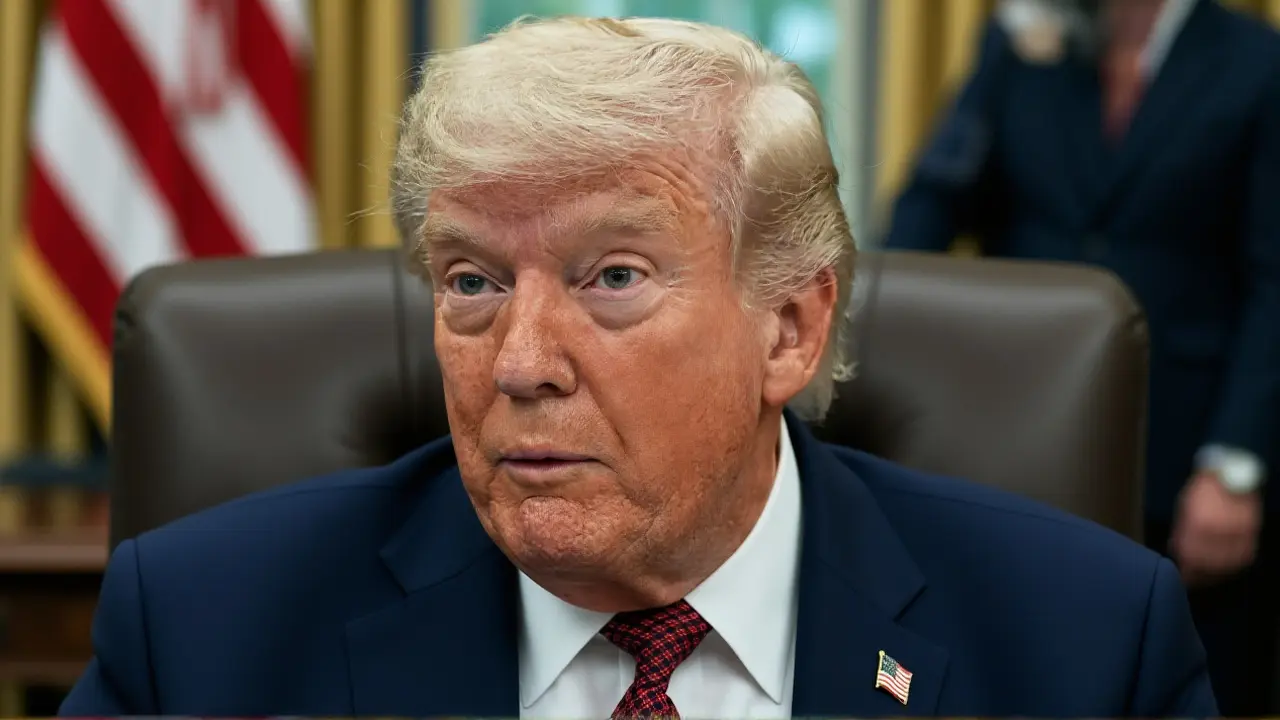
President Donald Trump has doubled down on fossil fuels, signing an executive order on Wednesday, April 22, 2026, to cement coal as the bedrock of American power. The move, announced during a "Clean Beautiful Coal" event at the White House, isn't just about sentiment—it's a strategic pivot that tasks the Department of War with purchasing electricity directly from coal-powered plants. By framing energy as a national security asset, the administration is attempting to link the survival of the coal industry directly to the strength of the U.S. military.
Here's the thing: this isn't an isolated event. It's the climax of a week-long blitz to redefine the U.S. energy map. Just twenty-four hours earlier, on April 21, 2026, the President was in Pittsburgh for the inaugural Energy and Innovation Summit. There, he didn't just talk about mining; he spoke about the "AI race." The administration's logic is straightforward: you can't run massive artificial intelligence data centers on intermittent power. To beat China, they argue, the U.S. needs the raw, constant baseload power that only coal and natural gas can provide in the volumes required.
The Budget Battle and the "Frozen" Funds
While the rhetoric at the White House was celebratory, the mood on Capitol Hill has been a bit more tense. On April 15, 2026, Chris Wright, the Secretary of Energy of the Department of Energy, faced a grilling from the House Appropriations Subcommittee on Energy and Water Development. Wright was there to defend a 2027 budget request that totals $48.8 billion—which, interestingly, is about $1.4 billion less than current spending levels.
But the real drama isn't the budget cut; it's the freeze. Turns out, the Trump administration has put the brakes on billions of dollars in loans and grants inherited from the Biden era. Secretary Wright told Bloomberg Television that these funds—issued in the window between the 2024 election and the January 2026 inauguration—simply won't move forward. It's a clean break from previous green-energy incentives, signaling that the new administration has little interest in subsidizing the previous era's priorities.
The House subcommittee eventually pushed through a $57.3 billion spending bill for energy and water programs via a party-line 10-5 vote. The divide is stark: one side sees a return to "common sense" energy, while others worry about the long-term abandonment of renewables.
Exporting "Energy Dominance" to Asia
The administration isn't keeping this strategy domestic. To project power abroad, they've launched the National Energy Dominance Council. This group is essentially the diplomatic arm of the "drill, baby, drill" philosophy. On March 14-15, 2026, officials from the Environmental Protection Agency, the Department of the Interior, and the DOE traveled to Tokyo for the first-ever Indo-Pacific Energy Security Ministerial and Business Forum.
The goal in Japan was clear: convince Asia-Pacific allies to pivot toward American energy exports. By securing these markets, the U.S. effectively uses liquid natural gas (LNG) and coal as tools of statecraft, reducing the reliance of allies on volatile regions or competitors like Russia and China. It's a high-stakes game of geopolitical chess where the pawns are pipelines and tankers.
The Path to July 4th and Freedom 250
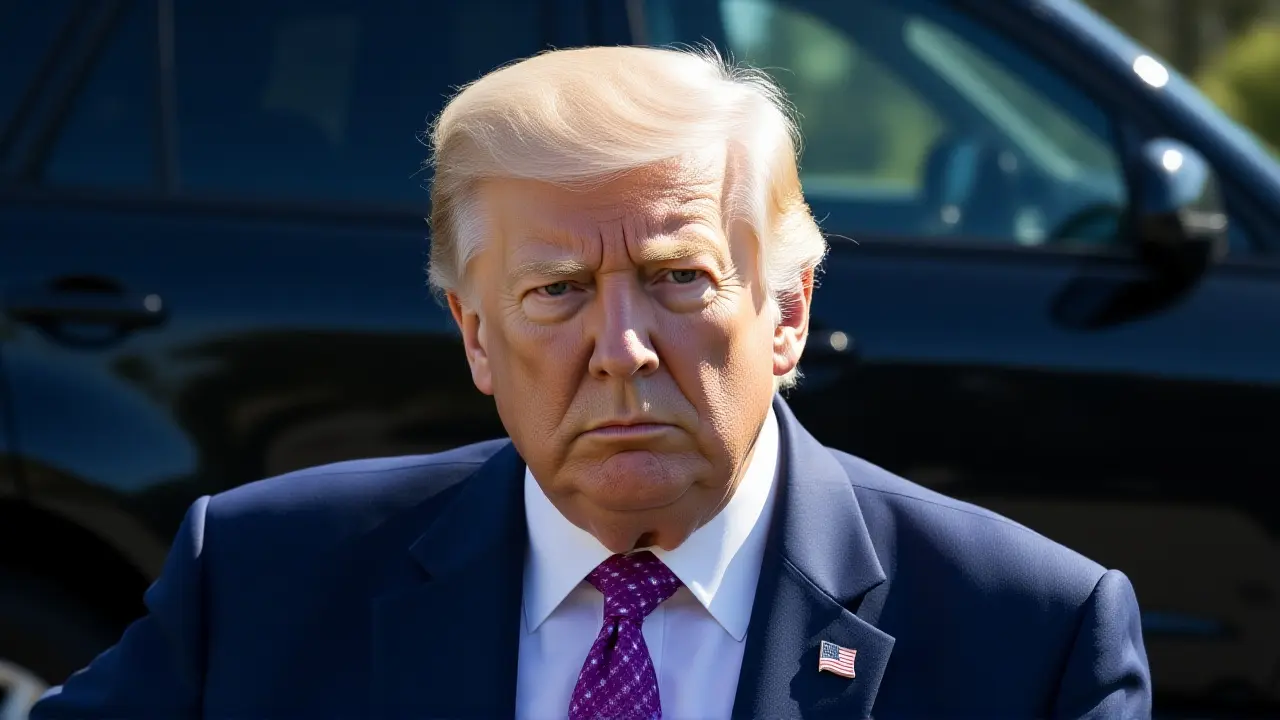
If you think this is just about policy, look at the branding. The Department of Energy is prepping a major PR push for Freedom 250United States, the massive celebration of the nation's 250th anniversary on July 4, 2026. Secretary Wright will narrate a digital feature titled "America's Energy Past & Future," which will likely frame the current shift back to coal not as a regression, but as a restoration of American strength.
This will be accompanied by a series of 60-second "innovation" clips. The administration wants to rewrite the narrative, moving away from the climate-centric discourse of the last decade and toward a story of industrial resilience. This follows the President's 2025 appearance at the United Nations, where he openly dismissed renewable energy targets in favor of what he calls "common sense energy policies."
Key Facts at a Glance:
- Executive Action: New order mandates the Department of War purchase coal-plant electricity.
- Budgetary Shift: DOE budget set at $48.8 billion for 2027, a $1.4 billion decrease.
- Policy Pivot: Billions in Biden-era green loans have been officially frozen.
- Global Reach: Inaugural energy forum held in Tokyo on March 14-15, 2026.
- Cultural Integration: Energy narrative to be center-stage for Freedom 250 in July 2026.
Frequently Asked Questions
Why is the Department of War involved in energy purchasing?
The administration believes that energy reliability is a core component of national defense. By directing the Department of War to buy from coal plants, they ensure that critical military infrastructure is powered by a stable, domestic source that isn't subject to the variability of wind or solar power.
What happened to the Biden-era energy loans?
Secretary Chris Wright confirmed that these loans and grants have been frozen. The administration claims these funds were improperly committed during the transition period between the 2024 election and the 2026 inauguration, and they do not intend to fulfill those financial commitments.
How does coal production relate to the AI race with China?
Artificial Intelligence requires massive amounts of electricity to power data centers. The Trump administration argues that to maintain a competitive edge over China, the U.S. must maximize energy production from the most reliable sources, specifically coal and natural gas, to avoid power shortages during the AI expansion.
What is the goal of the National Energy Dominance Council?
The council is designed to promote American energy exports globally. This was exemplified by the March 2026 forum in Tokyo, where the U.S. aimed to strengthen energy ties in the Indo-Pacific region and displace competitors by offering American coal and LNG as the primary security alternative.







15 Comments
Baseload power is the only way to keep these massive AI clusters running without risking a grid collapse
Coal provides that stability that wind and solar just can't deliver at scale yet
Sure because nothing says "future" like burning rocks from the 1800s
Oh wow just great
Let's just pretend the atmosphere isn't a real thing while we chase the AI dragon
This is how you actually win the race! 🚀 Keep that energy flowing and let's dominate the tech space! 💪🔥
makes sense to secure the grid first if you want to beat china in ai you need raw power no matter where it comes from
Can we talk about the absolute audacity of freezing billions in loans just because the administration changed? It's practically theft of progress! I cannot believe this is happening in 2026. The drama on Capitol Hill is just the icing on the cake. Like imagine being a company that planned their whole 5-year strategy around a federal grant only to have it vanish overnight. Absolute chaos!
Looking at the geopolitical angle here it is actually quite fascinating how the National Energy Dominance Council is being used as a leverage tool in the Indo-Pacific region because by providing a stable alternative to Russian or Chinese energy exports the US is effectively buying political loyalty through infrastructure and long-term supply contracts which is a classic move in realpolitik and while the environmental impact is obviously a concern the strategic necessity of reducing reliance on adversarial states often outweighs the short-term ecological goals in the eyes of the Department of War
The synergy between baseload capacity and high-density compute requirements is basically a prerequisite for scaling LLMs globally
Just feels like we are going in circles with energy policy... :(
Stability is key for the military
Interesting pivot
Calling it "Clean Beautiful Coal" is the most hilarious bit of branding I have ever seen in my life
Absolutely wild
US energy dominanc is the way to go!! 🇺🇸 let's get it done ⚡️
This is the bold move we needed to stop lagging behind! Direct purchasing from plants is a total power move to keep the lights on!
I totally get why people are worried but let's look at the bright side! This could create so many jobs in the energy sector and really kickstart industrial growth again! 🌟 We can always find ways to make it cleaner as we go! ✨